Millions of Americans have the neurological condition essential tremor. Often, that means their hand shakes so badly, they can’t hold a pen, fork, or glass of water. Every activity of daily living is compromised, day and night.
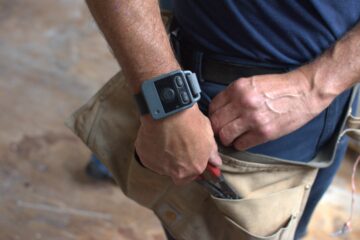
The remedies are limited: medication that may require several dosing adjustments and have undesirable side effects; deep brain stimulation surgery, an up-to-12-hour procedure, in which the patient is awake.
Mechanical engineering students at the Massachusetts Institute of Technology devised another solution. They formed a company, Encora Therapeutics, and created a chargeable watch-like device, worn on the wrist, that disrupts the tremor signal. The X1 provides patients with stability and improved motor control, allowing them to eat soup with a spoon, dial a telephone, or plug a cord into an electric outlet.
A video shows a patient with a severe hand tremor who couldn’t trace a drawn spiral on a piece of paper with a marker. Wearing the X1, he was able to trace the spiral nearly perfectly. His expression turned to joy and amazement. Onlookers cheered.
After eight years of work, three clinical studies, and a few rounds of funding, with only a handful of employees in a Boston loft, Encora earned FDA authorization for the X1 as safe and effective for patients. The company announced the clearance Feb. 12, 2026.
A critical next step was earning Medicare approval to cover use of the X1 for beneficiaries. Essential tremor can occur at any age but is especially prevalent in the Medicare population. In one major study, 75 percent of patients with essential tremor were aged 65 or older.
Getting Medicare coverage for Durable Medical Equipment (DME) technologies like the X1 is a time-consuming process. To bill Medicare directly, an FDA-cleared operator must complete each of the following steps: developing standard operating procedures, accreditation-aligned policies, and trained staff; obtaining state DME licenses; securing five device prescriptions and associated documentation; receiving Durable Medical Equipment, Prosthetics, Orthotics, and Supplies (DMEPOS) accreditation (notified-body audit); and completing Medicare supplier enrollment (Medicare audit).
Encora was moving forward. Then a bombshell hit. The Centers for Medicare and Medicaid Services (CMS) issued a moratorium on new DMEPOS provider enrollment, effective Feb. 27, 2026, just two weeks after Encora shared its FDA clearance of the X1.
The CMS moratorium is set for six months. It could be extended.
The moratorium blocks Encora from completing its enrollment as a Medicare DMEPOS supplier. The only option for reaching Medicare beneficiaries with the X1 is working with an already established third-party DMEPOS distributor. Such an arrangement could disrupt a valuable service Encora offers patients: a high touch point with trained representatives who monitor the device remotely. Each patient is assigned a representative to answer questions, analyze data, and advise on how to achieve maximum benefit from the X1.
Encora notes that the majority of the patients in its clinical studies were Medicare age and had no trouble using the X1, especially with the ability to get personalized advice when needed. Equally, prescribing physicians enjoy direct contact with Encora for clinical support. The personal contact that has supported the successful use of the X1 so far could be lost in a third-party arrangement.
In Encora’s case, the effect is compromised access to a treatment for essential tremor that costs far less than higher-risk brain surgery and lacks the side effects of prescription drugs. The patients whose lives could change through an ingenious piece of medical technology miss out. An ethical provider, willing to meet every high standard, is sidelined. Innovation is stalled.
Encora is one of many small companies suffering under an approach that while well-intentioned, presents numerous unintended consequences. AdvaMed, on behalf of our member company Encora, and hundreds of others like it, urges CMS to fix any policies to reduce or minimize harm to legitimate companies and ultimately, the patients they’d serve with proven technologies.

Nadim Yared, Encora chairman and CEO, a medtech veteran, came out of retirement to join Encora because he believed so strongly in its mission.
He said, “We understand and share CMS’s commitment to curbing fraud in the DMEPOS space. However, there is a clear distinction between unregulated resellers and innovative manufacturers. An FDA breakthrough-designated product, like Encora’s X1, represents a multi-year investment in safety, design, and clinical rigor; we are far from the ‘fly-by-night’ risks that typically drive fraudulent activity. I urge CMS to consider a tiered certification process, specifically an expedited path for innovative medical devices, to ensure that the fight against fraud doesn’t unintentionally stifle medical progress.”