Millions of patients’ lives are improved every day because of advancements in medical technology. But too often, gaps in coverage and access prevent patients from benefiting from the safe, effective, and innovative technologies that can help detect disease earlier, improve treatment, and support better outcomes.
That is why AdvaMed’s 2026 Patients First Agenda focuses on supporting policies that put patients at the center of health care. Across the country, AdvaMed works alongside patient advocacy group partners to help address gaps in access and coverage for critical medical technologies and bring innovative care to patients and families when they need it most.
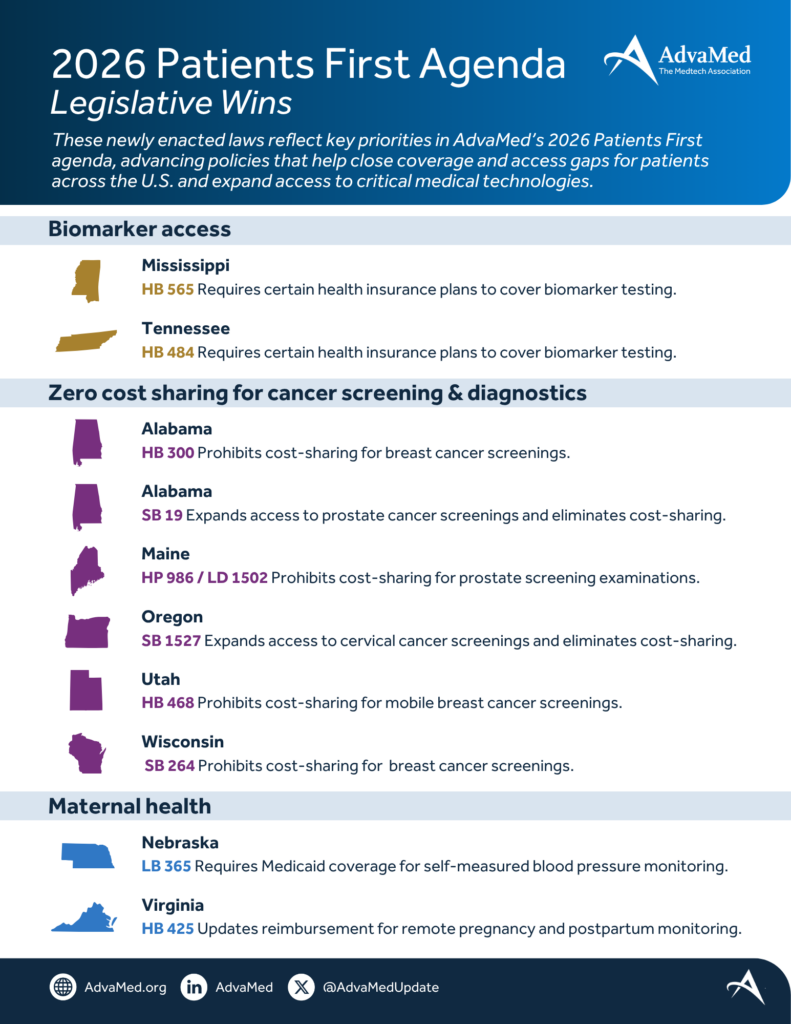
This year, AdvaMed supported the advocacy work of our partners in advancing 10 state legislative wins reflecting key Patients First priorities, including expanded access to biomarker testing, zero-cost sharing for cancer screening and diagnostics, and coverage for remote maternal care technology. Together, these wins mark important progress toward closing access gaps for patients across the U.S.
Expanding Access to Biomarker Testing
Biomarker testing is used in the detection, treatment, and monitoring of many diseases, including cancer and Alzheimer’s disease. As new, actionable biomarkers are discovered, it is critical that patients have access to the testing that can help guide more personalized and effective care.
AdvaMed supports legislation ensuring coverage of medically appropriate biomarker testing, helping patients receive the right treatment, in the right dose, at the right time.
In 2026, AdvaMed supported partner-led efforts to advance biomarker access legislation in Mississippi and Tennessee:
Mississippi HB 565 Requires state regulated health insurance plans, including Medicaid, to cover biomarker testing.
Tennessee HB 484 Requires state regulated health insurance plans, including TennCare, to cover biomarker testing.
These policies help reduce coverage barriers and support more informed treatment decisions for patients and providers.
Reducing Cost Barriers for Cancer Screening and Diagnostics
The fear and frustration of unexpected or high out-of-pocket costs should not prevent or delay patients from seeking recommended follow-up care. Unfortunately, this is the reality for too many patients.
AdvaMed supports legislation eliminating cost sharing obligations, like copays, deductibles, coinsurance, or out of pocket maximums, for patients so they and their families can focus on what is best for their health, not only what they can afford. Legislation like this helps catch diseases like cancer sooner, and when it is more treatable.
In 2026, AdvaMed supported partner efforts in six states in advancing legislation focused on eliminating cost sharing for supplemental cancer imaging and diagnostics:
Alabama HB 300 Prohibits state regulated plans from imposing cost sharing for supplemental and diagnostic breast cancer screenings.
Alabama SB 19 Improves access to prostate cancer screenings and eliminates cost sharing for state regulated plans for these screenings.
Maine HP 986 / LD 1502 Prohibits state regulated plans from imposing cost-sharing for certain prostate screening examinations.
Oregon SB 1527 Improves access to cervical cancer screenings and prohibits state regulated plans to impose cost sharing for medically necessary cervical cancer screenings and related procedures.
Utah HB 468 Amends Utah state law to prohibit state regulated health benefit plans from requiring cost sharing for mobile breast examinations that detect breast cancer.
Wisconsin SB 264 Prohibits state regulated plans from imposing cost sharing for supplemental and diagnostic breast cancer screenings.
These policies help ensure patients can access medically recommended screenings, diagnostic imaging, and follow-up care without unnecessary financial barriers. By supporting earlier detection and timely diagnosis, these measures can help improve outcomes for patients and families.
Supporting Maternal Health Through Remote Monitoring
Medical technologies also play a critical role in supporting maternal health, particularly for pregnant and postpartum patients who may need ongoing monitoring for conditions such as hypertension. Remote monitoring tools can help providers identify concerning health changes earlier and support more timely care. These technologies meet patients where they are, not only where they can physically access care, which is especially important in communities with limited access to providers or health care facilities.
In 2026, AdvaMed supported partner-led efforts to advance two maternal health legislative wins in Nebraska and Virginia:
Nebraska LB 365 Requires Medicaid coverage of self-measured blood pressure monitoring services.
Virginia HB 425 Reestablishes and modifies provisions for reimbursement of remote monitoring services provided during pregnancy and postpartum for high-risk pregnant patients and those of advanced maternal age.
These policies recognize the value of remote maternal care technologies in helping providers monitor patients during pregnancy and postpartum, identify potential risks earlier, and support timely intervention when needed.
Putting Patients First Across the Country
Across these 10 legislative wins, AdvaMed’s 2026 Patients First Agenda reflects a shared goal: helping patients access the medical technologies that can improve their health, support earlier diagnosis, and strengthen care.
AdvaMed is proud to work alongside patient advocates in support of legislation that advances the goals of the 2026 Patients First agenda and helps close coverage and access gaps for patients across the U.S. As medical technology continues to improve lives, strengthen care, and support better outcomes, AdvaMed will continue collaborating with our partners to advance patient-centered solutions nationwide.