
Patient Access to Breakthrough Medical Devices
Patients should not have to wait years for Medicare coverage of procedures using breakthrough medical technologies the FDA has already authorized for marketing after determining they meet applicable safety and effectiveness standards.
Breakthrough Medical Devices Overview
The FDA’s Breakthrough Devices Program is designed to promote patient access to medical technologies that provide more effective treatment or diagnosis for life-threatening or irreversibly debilitating diseases or conditions than currently exist. These technologies can offer new options for patients who have few or no alternatives.
But FDA authorization is only one step toward patient access. For Medicare beneficiaries, a breakthrough device often cannot be meaningfully used unless Medicare also covers and pays for the procedure, test, or technology. Too often, that second step takes years.
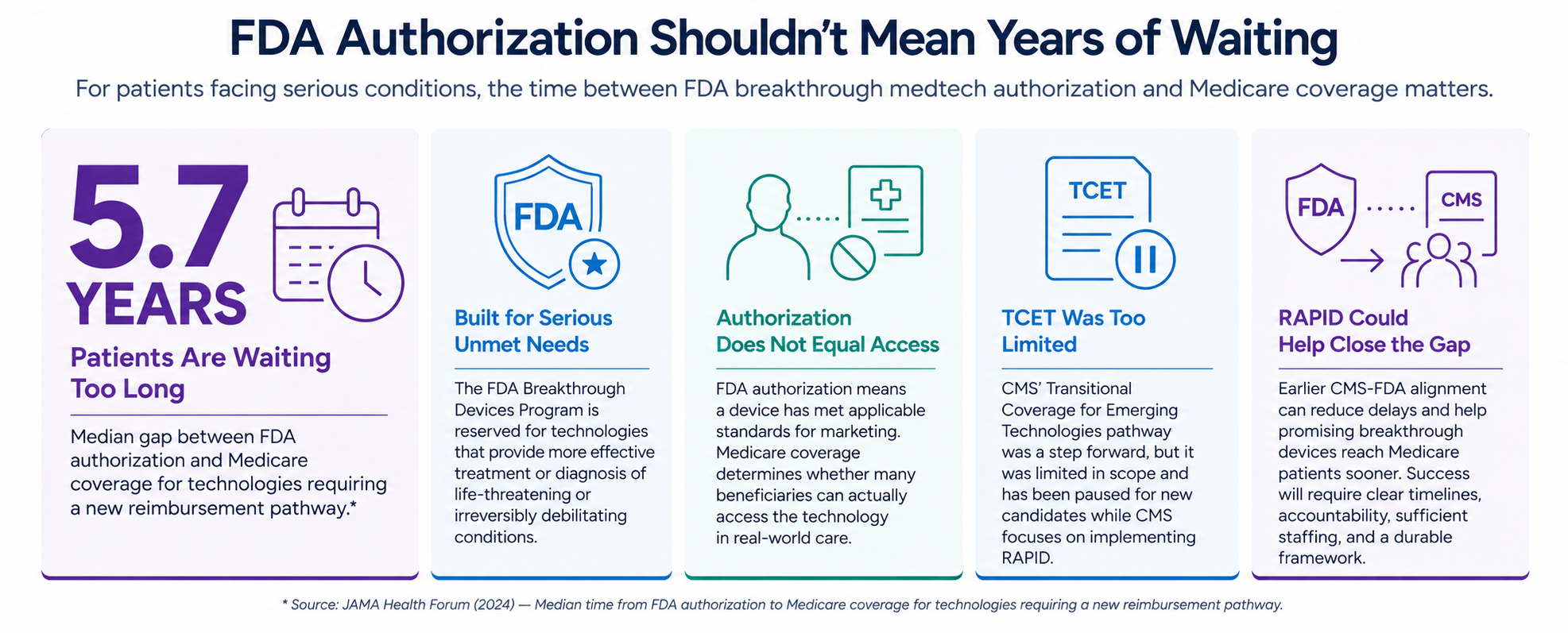
A prominent study found that for new medical technologies requiring a new reimbursement pathway, the median gap between FDA authorization and Medicare coverage is 5.7 years. Experts call this delay a “valley of death” between innovation and access — a period when a device may be FDA-authorized but remain out of reach for many Medicare beneficiaries.
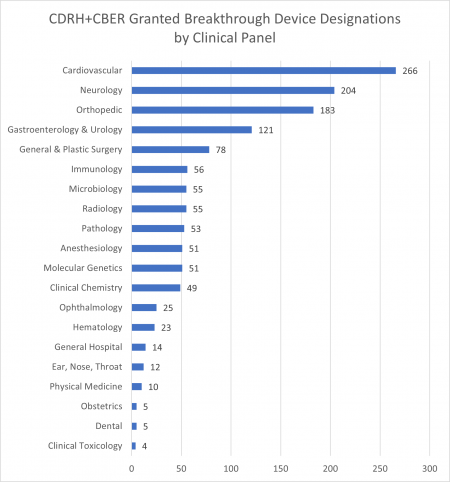
Number of Granted Breakthrough Device Designations by Clinical Panel
Why This Matters
This delay is especially harmful because breakthrough technologies are, by definition, intended for serious conditions and unmet medical needs. Medicare beneficiaries confronting heart disease, cancer, neurologic conditions, mobility limitations, and other serious health challenges should not face unnecessary coverage uncertainty when their doctors believe an FDA-authorized breakthrough technology is the right option.
CMS and FDA have proposed a Regulatory Alignment for Predictable and Immediate Device (RAPID) coverage pathway, a positive step toward a more aligned, predictable process. RAPID is designed to engage CMS earlier in evidence planning and support faster Medicare coverage decisions for eligible breakthrough devices, including certain FDA-designated Class II devices participating in FDA’s Total Product Life Cycle Advisory Program and Class III devices regardless of TAP participation. But effective implementation will matter. A successful pathway must include clear timelines, accountability, adequate CMS resources, and a durable policy foundation that patients, clinicians, and innovators can rely on.
Another path forward is bipartisan congressional legislation, the Ensuring Patient Access to Critical Breakthrough Products Act, which would create a statutory transitional coverage pathway for qualifying FDA-authorized breakthrough devices and diagnostics while CMS evaluates permanent coverage.
AdvaMed supports policies that close the gap between FDA authorization and Medicare coverage so patients, advised by their doctors, can benefit from breakthrough medtech without unnecessary delay.

Resource
Scott Whitaker Op-Ed: Medicare must keep pace with FDA-authorized breakthrough medical technologies
Medicare breakthrough medical technologies face delays between FDA authorization and coverage decisions, slowing patient access to innovation.
Frequently Asked Questions
What is the FDA Breakthrough Devices Program?
The FDA Breakthrough Devices Program is a voluntary program for certain medical devices that may provide more effective treatment or diagnosis of life-threatening or irreversibly debilitating diseases or conditions. The program gives qualifying devices more frequent FDA interaction and prioritized review while preserving FDA’s standards for safety and effectiveness.
Does breakthrough designation mean FDA lowers its safety or effectiveness standards?
No. Breakthrough designation gives a device access to process efficiencies, such as earlier and more frequent communication with FDA. A device still must meet the applicable FDA evidentiary standards for clearance, approval, or authorization before it can be marketed.
Why does Medicare coverage matter after FDA authorization?
FDA authorization determines whether a device may be marketed after meeting applicable safety and effectiveness standards. Medicare coverage determines whether many seniors can actually access that technology in care. Without coverage and payment, hospitals and clinicians may be unable to offer an FDA-authorized breakthrough device.
How long can it take for Medicare coverage to follow FDA authorization?
For technologies requiring a new reimbursement pathway, a prominent study found a median 5.7-year gap between FDA authorization and Medicare coverage. AdvaMed has urged policymakers to close this gap so patients do not wait years for access to FDA-authorized breakthrough technologies.
What is the “valley of death” in breakthrough-device coverage?
The “valley of death” refers to the gap between FDA authorization and Medicare coverage. During that period, a breakthrough device may be FDA-authorized for marketing but remain practically unavailable to many Medicare beneficiaries because coverage and payment are not yet established.
What is the status of TCET?
The Transitional Coverage for Emerging Technologies pathway was a CMS effort to create a more predictable route to Medicare coverage for certain breakthrough devices. CMS has paused TCET for new candidates while focusing on RAPID implementation. AdvaMed supported TCET’s goal but raised concerns that the pathway was too narrow, limited to too few products, and insufficient to solve the broader access problem.
What is RAPID?
RAPID stands for the Regulatory Alignment for Predictable and Immediate Device coverage pathway. CMS and FDA have proposed RAPID to help align evidence expectations earlier in the development process and reduce delays between FDA authorization and Medicare coverage for eligible breakthrough devices, including certain FDA-designated Class II devices participating in FDA’s Total Product Life Cycle Advisory Program and Class III devices regardless of TAP participation.
Does AdvaMed support RAPID?
AdvaMed welcomes the proposed RAPID pathway as a positive step toward faster Medicare coverage of FDA-authorized breakthrough medtech. At the same time, AdvaMed has emphasized that the pathway must be finalized and implemented effectively, with clear timelines, accountability, adequate resources, and effective program management so patients can see the full benefits of new technologies.
Why does AdvaMed support congressional action alongside RAPID?
A guidance-based pathway can help, but it may not provide the durability and accountability patients and innovators need. Bipartisan congressional legislation would create a statutory transitional coverage pathway for qualifying FDA-authorized breakthrough devices and diagnostics while CMS evaluates permanent coverage.
Why should breakthrough diagnostics be included?
Diagnostics can detect disease earlier, guide appropriate treatment, and help avoid more costly care. Breakthrough diagnostic tests for conditions such as cancer, Alzheimer’s disease, or traumatic brain injury can be just as important to patient outcomes as therapeutic devices and should be included in statutory or comprehensive coverage solutions, even if specific administrative pathways such as RAPID do not currently include in vitro diagnostics.
AdvaMed’s Priority Policies
Establish a Durable Medicare Coverage Pathway for Breakthrough Devices
- Supports: A predictable, timely Medicare coverage pathway for FDA-designated and FDA-authorized breakthrough medical devices.
- Opposes: Leaving Medicare beneficiaries in uncertainty for years after FDA authorization while coverage decisions slowly proceed through fragmented or inconsistent processes.
- Recommends: Congress and CMS should establish a durable pathway that provides timely transitional coverage for qualifying breakthrough devices while CMS completes a structured review for permanent coverage.
Strengthen and Effectively Implement RAPID
- Supports: Earlier alignment between CMS, FDA, and innovators so the evidence generated for FDA review can also support Medicare coverage decisions.
- Opposes: A pathway that lacks clear timelines, accountability, adequate resources, or transition protections for products already invested in TCET or other coverage processes.
- Recommends: CMS should finalize and issue clear implementation details for RAPID, including firm milestones, transparent expectations, adequate staffing, and bridge provisions for technologies already in the coverage pipeline.
Codify a Long-Term Solution in Law
- Supports: Bipartisan congressional legislation, the Ensuring Patient Access to Critical Breakthrough Products Act, which would create a statutory transitional coverage pathway for qualifying FDA-authorized breakthrough devices and diagnostics while CMS evaluates permanent coverage.
- Opposes: Over-reliance on sub-regulatory guidance alone, which can be paused, narrowed, or withdrawn by a future administration.
- Recommends: Congress should enact a statutory framework that gives patients, clinicians, and innovators confidence that breakthrough coverage policy will remain stable and accountable over time, including for qualifying breakthrough diagnostics.
Include Breakthrough Diagnostics
- Supports: Including breakthrough diagnostic tests in comprehensive coverage solutions, recognizing the role diagnostics play in early detection, appropriate treatment, and improved outcomes.
- Opposes: Excluding diagnostics from statutory or comprehensive breakthrough coverage solutions, especially when tests can help detect serious diseases earlier and guide more effective care.
- Recommends: Policymakers should ensure breakthrough diagnostics are included in any comprehensive patient-access framework, even where specific administrative pathways such as RAPID do not currently include in vitro diagnostics.
Preserve Temporary Payment Pathways That Support Adoption
- Supports: Maintaining temporary payment tools, such as New Technology Add-on Payments and transitional pass-through payments, that help hospitals and clinicians adopt qualifying new technologies while longer-term payment systems catch up.
- Opposes: Abrupt policy reversals that reduce predictability for hospitals, clinicians, patients, and innovators.
- Recommends: CMS should preserve payment policies that support appropriate early adoption of breakthrough technologies, while continuing to evaluate evidence and value through established processes.
Hear Patient Stories
The Story of Medtech empowers patients to share their experiences with medical technology in an effort to educate, inspire, and create community.