
Ensuring Artificial Intelligence (AI) Reaches Its Full Potential for Patients
Artificial intelligence (AI) is revolutionizing medtech and health tech, facilitating precise diagnoses and treatments for positive patient outcomes.
AI in Medtech Overview
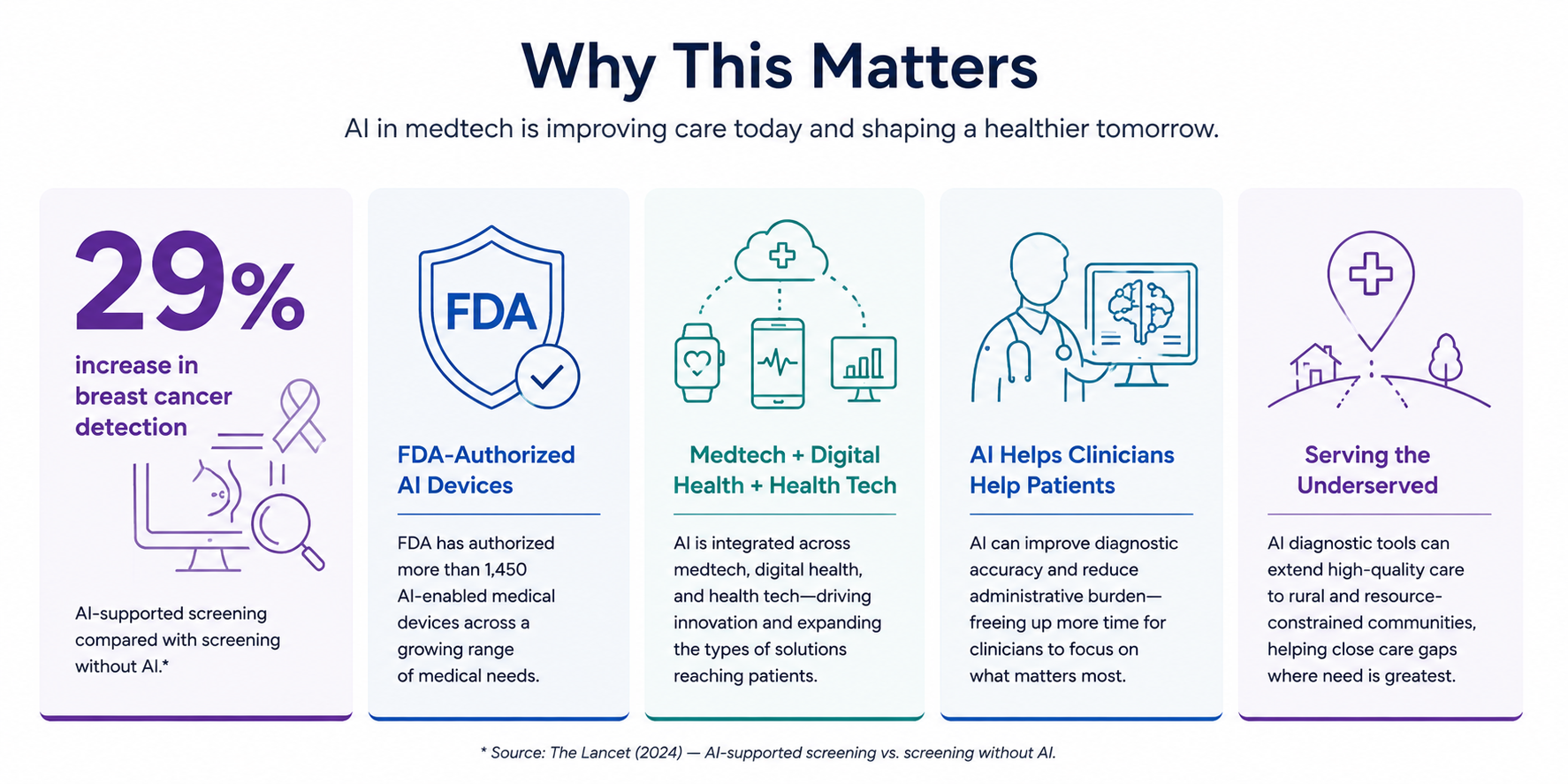
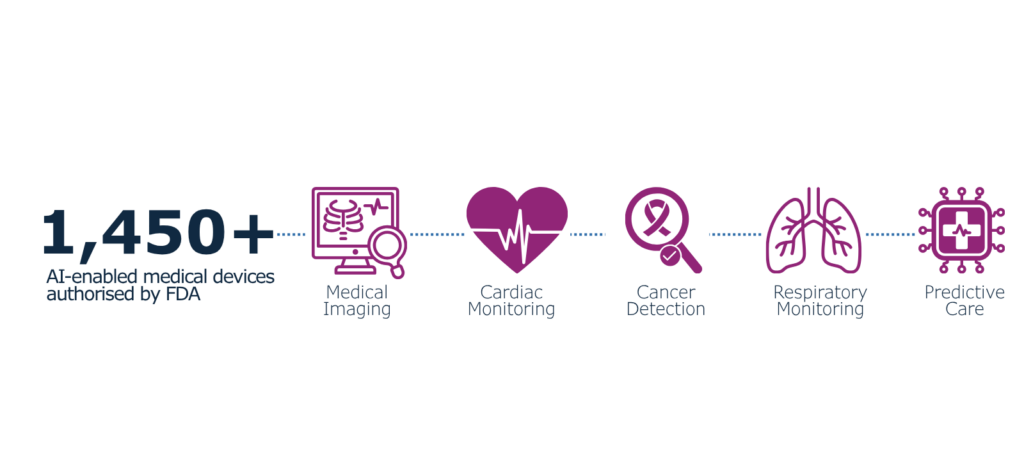
AI dominates current headlines, but its role in medical technology isn’t new. The FDA has evaluated and authorized AI-enabled medical devices for decades, with more than 1,450 individual products approved. The technology ranges from advanced imaging analysis tools to AI-driven cardiac monitors.
These innovations are reshaping patient care by enhancing diagnostic accuracy, improving treatment pathways, and leveraging vast amounts of data for better outcomes.
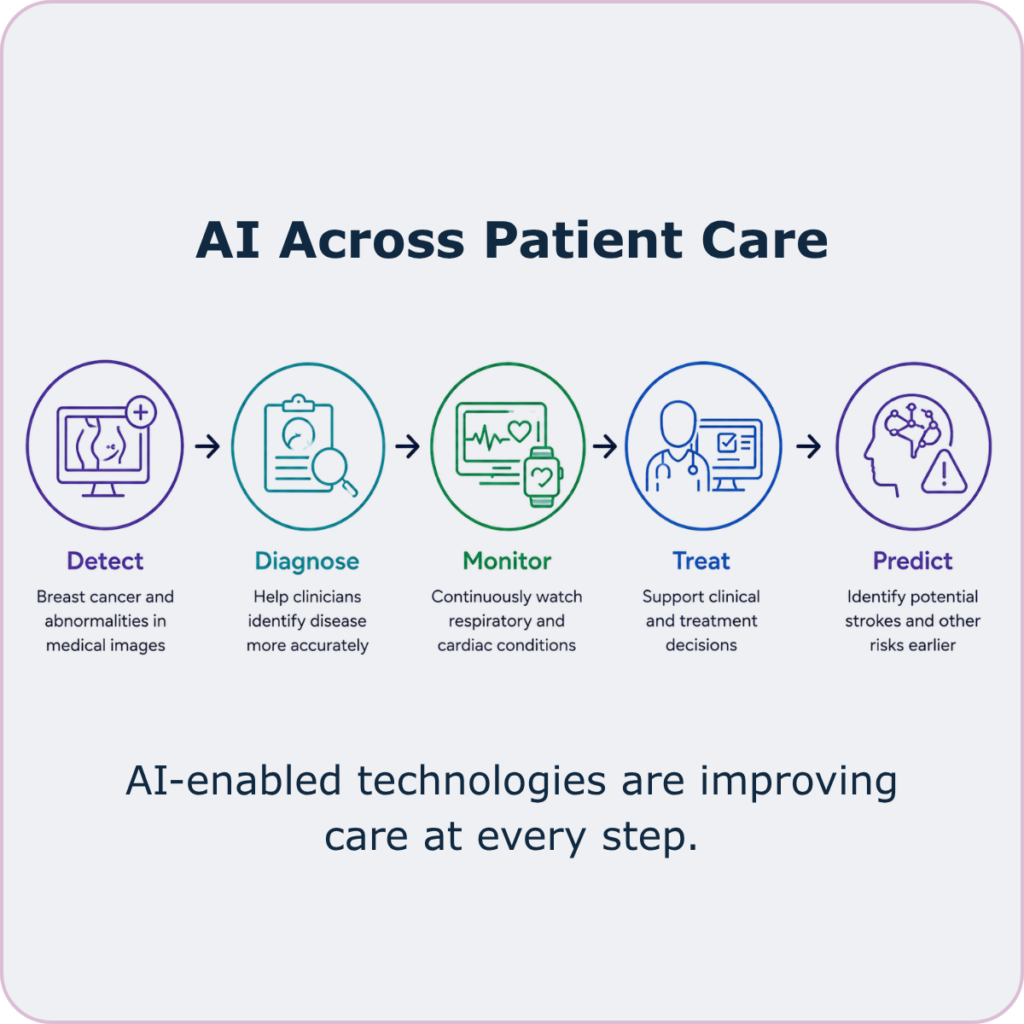
AI offers comprehensive data analysis, acting as a second set of eyes to help clinicians detect a wide array of health conditions, from broken bones to irregular heartbeats to diabetic-related vision loss. Breast cancer diagnoses benefit from the tremendous computing power of AI, with studies showing increased accuracy and fewer false positives using AI.
AI uses include continuous respiratory monitoring to identify opioid-induced respiratory distress, advanced detection of heart blockages, and stroke prediction enabling timely intervention before irreversible damage occurs.
Why This Matters
Even as these remarkable innovations proliferate, AI applications in medicine have even greater potential to improve health and solve systemic problems, such as provider shortages and underserved communities.
Realizing AI’s full potential to serve patients requires policies and regulations that support AI-enabled medtech and health tech, promoting innovation and new applications throughout medicine. Supportive policies include appropriate reimbursement for AI-enabled diagnoses and treatment. AdvaMed advocates for the policies that help our member companies flourish with AI-enabled technologies to transform the patient and clinician experience.

Resource
Principles for Artificial Intelligence in Medical and Digital Health Technologies
Discover how AI-enabled medtech can improve diagnosis, inform treatment, streamline workflows, and help clinicians deliver better patient care.
Resource
AI Policy Roadmap
Artificial intelligence is revolutionizing health care, but its role in medical technology is far from new. The FDA has been evaluating and authorizing AI-enabled medical devices for over 25 years, with more than 1,000 products already approved—ranging from advanced imaging analysis tools to AI-driven cardiac monitors.
Frequently Asked Questions
What does ‘safe and responsible AI’ mean in the context of medical technology?
It means developing, deploying, and overseeing AI-enabled medical devices in ways that protect patient safety, ensure clinical accuracy, maintain human oversight, and build trust among clinicians and patients.
How is AI currently used in medical devices?
AI is used across diagnostics (detecting cancers in imaging scans), monitoring (continuous patient surveillance in ICUs), surgical assistance (guiding robotic procedures), and administrative functions (automating clinical documentation).
What is the FDA’s role in regulating AI-enabled medical devices?
The FDA regulates AI-enabled devices as Software as a Medical Device (SaMD) under existing frameworks, and has issued guidance on predetermined change control plans, transparency, and post-market monitoring for adaptive AI systems.
What are the biggest risks of AI in medtech that regulation needs to address?
Key risks include algorithmic bias (AI underperforming for underrepresented populations), lack of clinical transparency (‘black box’ decisions), distribution shift (AI degrading in new clinical environments), and cybersecurity vulnerabilities.
What is AdvaMed’s position on AI regulation for medical devices?
AdvaMed supports a risk-based, adaptive regulatory framework that promotes innovation while ensuring patient safety. The association advocates for clear FDA guidance, international regulatory harmonization, and policies that support responsible AI deployment.
How should bias and health equity be addressed in AI-enabled medical devices?
AI devices should be trained and validated on diverse, representative datasets. AdvaMed supports transparency requirements and post-market surveillance mechanisms to detect and correct bias before it harms patients.
What is a ‘predetermined change control plan’ for AI medical devices?
A predetermined change control plan (PCCP) allows AI device developers to define in advance what types of algorithm updates they can make without triggering a new FDA review — enabling adaptive AI while maintaining safety oversight.
How does the EU AI Act affect medical technology companies?
The EU AI Act classifies most medical AI applications as ‘high-risk,’ imposing rigorous conformity assessment, documentation, and transparency requirements. U.S. companies selling into the EU must navigate both FDA and EU AI Act obligations.
AdvaMed’s Priority Policies
FDA Should Continue to Lead AI Regulation in Medtech
- Supports: Maintaining FDA as the lead regulator for AI applications in medtech.
- Opposes: Diverging from FDA’s authority over AI-enabled medical devices.
- Recommends: Ensure FDA has adequate resources to oversee rapidly evolving AI technologies through user fees and congressional appropriations.
Learn more →
Establish Adequate Reimbursement for AI-Enabled Medtech
- Supports: Adequate reimbursement for AI-enabled health technologies.
- Opposes: Payment policies that prevent providers from offering AI-enabled care.
- Recommends: Congress and CMS should modernize payment policies to reflect current medical practice.
Learn more →
Create a Federal
Patient Data Privacy Framework
- Supports: A comprehensive federal framework that protects patient data and promotes innovation.
- Opposes: A patchwork of conflicting state privacy laws.
- Recommends: Establish clear national rules governing the appropriate use of health data.
Learn more →
AI in Medtech today
AI-enabled technologies are already improving care across a wide range of medical needs,
Explore the full FDA List →
Hear Patient Stories
The Story of Medtech empowers patients to share their experiences with medical technology in an effort to educate, inspire, and create community.